
Spin off from strength, not from scratch
The best new ventures are the second use of something a company already does well: a dataset, a platform, a channel, a process built for internal use. We find which one can stand on its own, give it a company, build the product and take it to first customers.
We have done this from inside a business, not from a slide deck
We built three companies of our own while the day job carried on, and a few dozen products for other people. In business the execution matters more than the idea, and the plan for getting there matters most of all. We know which parts of a parent company give a new venture a head start, and which ones quietly strangle it.
- Three companies of our own, started alongside client work
- Thirty plus products shipped for founders and enterprises
- We say which ideas are not worth the distraction
- Straight talk with the board and with the team building it

Four stages, one team the whole way
Most companies assemble this from a strategy consultancy, an agency and a marketing supplier who never meet each other. Here it is one team that stays with the venture as it changes shape.
Validate
We start with what you already own: data, customers, distribution, a tool your team built for itself. Then we test which of them a separate company could stand on, and what it is worth outside your walls.
Structure
The venture gets its own shape. Business model, financial plan, legal setup and the operating relationship with the parent: enough independence to move, enough connection to be worth spinning out of you rather than anyone else.
Build
A dedicated team builds the product, so your core roadmap keeps its people. A first version in front of real users in weeks, not after the next budget cycle.
Launch
Its own audience, its own funnel, its own brand where that helps. We take it to first paying customers and hand over a growth engine the venture team can run without us.
The most expensive spin-off is the one that should have stayed a feature
Not every good idea deserves its own company. We audit the assets you already hold, size the market beyond your current customer base, and come back with a straight answer, including the version where the answer is to keep it in house.
- Audit of the data, technology and distribution you already own
- Validation against a market that is not your existing one
- Spin-off design: what leaves the parent and what stays
- An honest read on whether it survives on its own

A company is architecture too, and a spin-off has two of them
The new venture needs a model that stands on its own and a relationship with the parent that does not quietly kill it. We plan the money, the legal shape, the ownership of what gets carried over, and the operating rhythm, then set up the tools and the people who will run it day to day.
- Strategy, business model and the plan to get there
- Financial planning and legal consultation
- Where the venture ends and the parent company begins
- Project management to SMART goals, on time and on budget
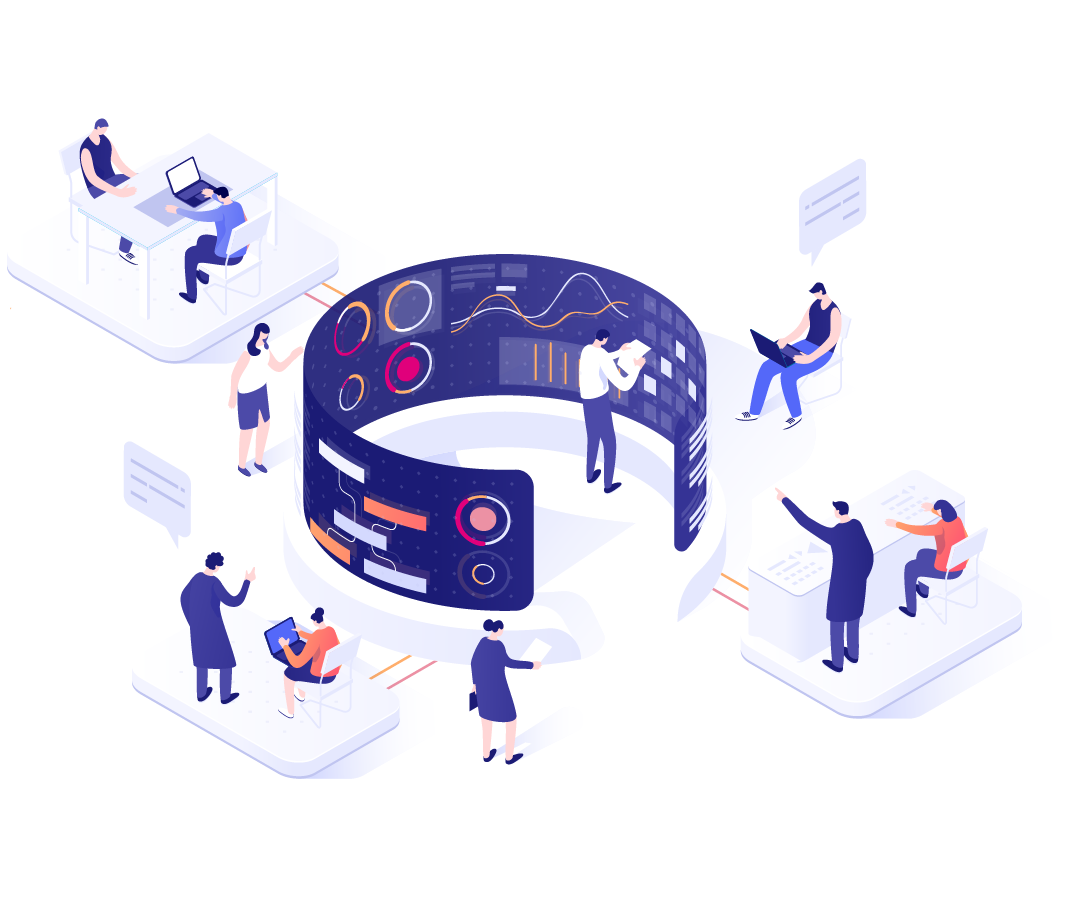
A delivery team that does not come out of your own roadmap
Most corporate ventures die because they were staffed with people who still had a day job. We bring the team instead, and we build with coding agents under our own standards and guardrails, so the first version takes weeks while your engineers keep shipping the core product.
- Agentic delivery with the guardrails that make it safe
- A usable product in weeks, then iterations on real feedback
- Architecture that will not need replacing at the first scale-up
- Code, infrastructure and accounts belong to the venture
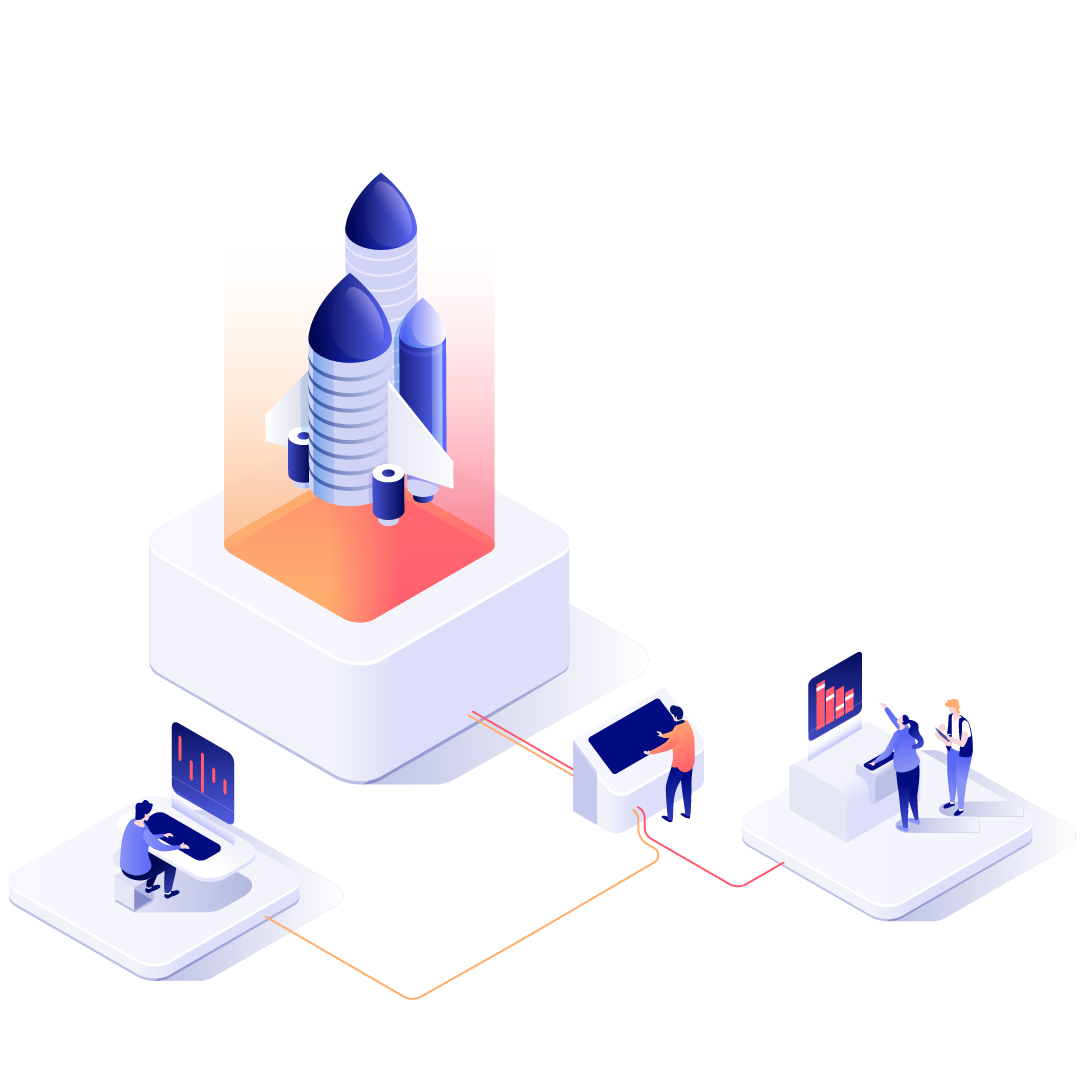
A new company needs its own customers, not a favour from your account list
Selling the spin-off to people who already buy from you proves very little. We build an audience that has never heard of the parent brand: channels, funnels and campaigns measured honestly, keeping the few things that work and quietly burying the rest.
- Positioning and audience building beyond the parent brand
- Lead generation funnels for B2B and B2C
- Data mining and sales automation
- Events, hackathons and launch campaigns
What the studio puts around a new venture
Not a desk and a logo on a wall. The things that decide whether a spin-off survives its first two years outside the parent company.
Mentorship and coaching
Guidance for whoever you put in charge, from people who have run their own companies: the model, the team and the milestone that actually matters next.
Resources and infrastructure
Workspace, tooling and cloud, plus legal and financial advisory, so a new entity is operational in days instead of waiting on a procurement cycle.
Network
Investors, advisors and other founders. Useful the moment the venture goes looking for money that does not come out of the parent's budget.
Workshops and training
Hands-on sessions for the venture team on product, positioning and customer acquisition, so the capability ends up staying with you.
An engineering team on tap
The same people who run systems for energy, fintech and aerospace clients, so the spin-off ships at serious quality before it has hired anyone.
A community around it
Hackathons, meet-ups and workshops in our own space. A venture team that only ever talks to its parent company stops learning.
Products that started exactly here
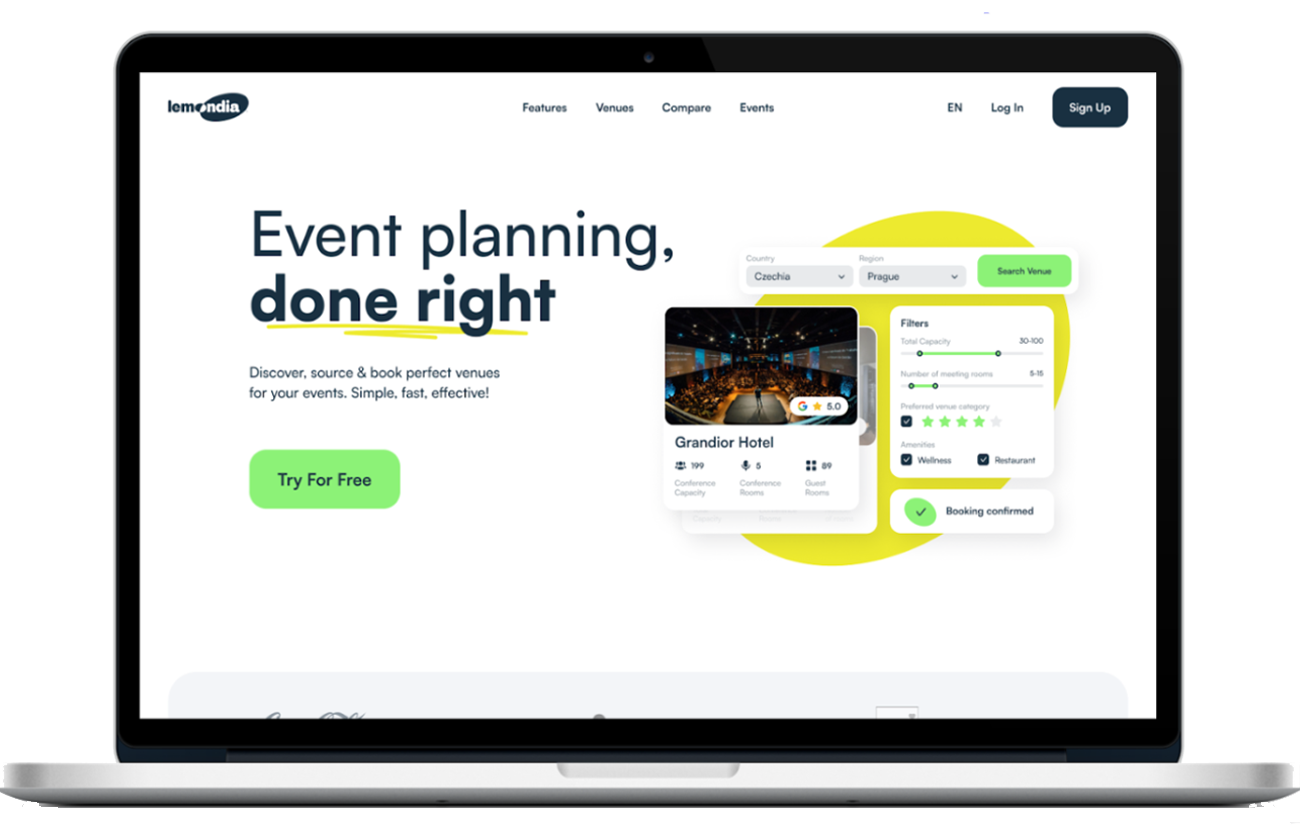
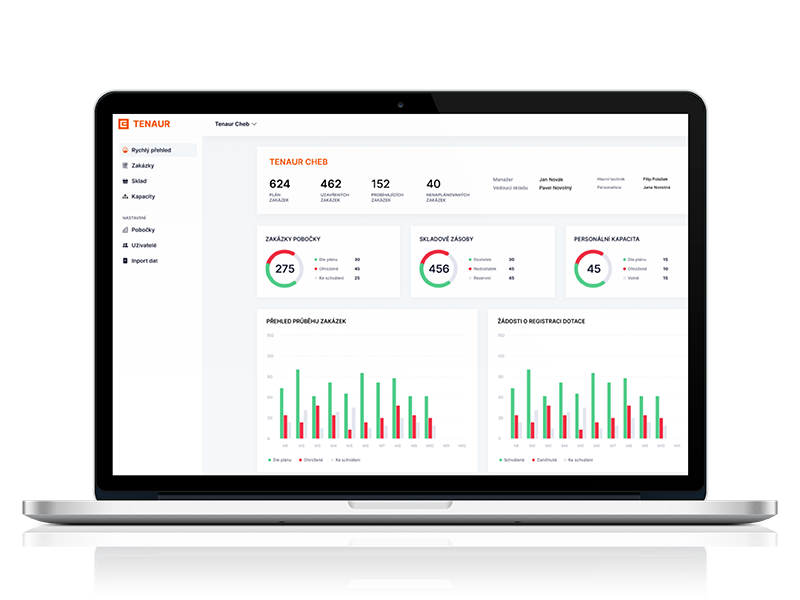
An internal tool, a dataset and a side project, each of which ended up as something people use every day.

The questions companies ask first
Every company is sitting on its next one
Bring the asset, the idea or the internal tool nobody outside has ever seen. We will tell you whether it can stand on its own, and what the first step would take.
Talk to the studio